Activities WP3
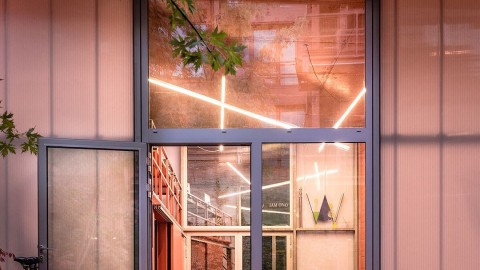
Extra info 'Conceptual lighting design, methodology and cases'
In the accelerator program performance lab, the Light & Lighting Laboratory (KU Leuven), in collaboration with cluster Groen Licht Vlaanderen, wanted to focus on innovation in lighting for museums and heritage. The aim was to develop an improved lighting device (demonstrator) that responds to the latest and future wishes of stakeholders active in the ‘light for art’ business.
This route will be conceived as an expedition (e.g. Mount Everest or North Pole) with different objectives within the different stages (parts).
In a first phase of the expedition (the ‘be prepared’ stage) all actors were set at the same level by introductions (theoretically and practically with hands-on) to the requirements of lighting technology and lighting design. In the first session, the focus goes to mainly conceptual lighting design in a broad spectrum of applications. During the two introductory sessions, theoretical knowledge transfer and practical experience go hand in hand. Doing this, we aimed to reach a broad target group of designers (lighting designers, product designers, scenographers, interior architects, etc.) and students active within the 'Light for art' concept.
As part of the 2024 Lighting Specialisation Course, this session, which took place at ERCO (Brussels) on 30 September 2024, was open to external participants.
The session covered the following topics, amongst others:
- design methodology, what constitutes atmosphere and how it is constructed,
- creating the appropriate setting and recognising potential for improvement,
- atmosphere first, then the luminaire: a balancing act,
- balancing standards and design vision.
- principles of perception of light and shadow
- colours, materials and their reflectance values
- trends in interior design, and their conflicting demands on lighting, such as ceiling illumination versus visible cable ducts or ventilation.
Following the training session led by Sabine De Schutter, there was a brief introduction by ERCO (Thomas Schielke), followed by a guided tour of the showroom.
Downloads:
- Presentation Sabine: link
Performance Lab 2
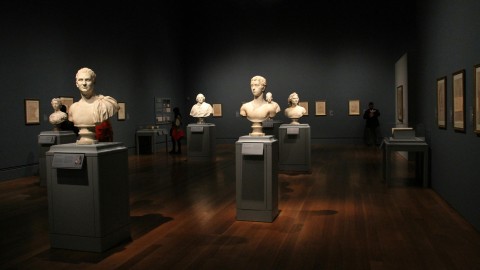
Extra info: How to implement conceptual lighting design – lighting for art and heritage
In the first phase of the expedition (the ‘be prepared’ stage) all actors were set at the same level by introductions (theoretically and practically with hands-on) to the requirements of lighting technology and lighting design. In a second session, the requirements and possibilities for lighting design for museum applications will be discussed more in detail ( with focus on a the applications in a Science museum). During the two introductory sessions, theoretical knowledge transfer and practical experience go hand in hand. Doing this, we want to reach a broad target group of designers (lighting designers, product designers, scenographers, interior architects, etc.) and students active within the 'Light for art' concept.
This session, with Guest Lecturer Chris Pype, did cover the following topics:
- What should you look out for when it comes to museum lighting? What are the pitfalls?
- How to deal with:
- tracks
- spotlights
- uniformity
- contrasts
- colour characteristics
- reflection
This session also included a guided tour of the Ghent University Museum, focusing on the museum’s lighting.
Downloads:
- following material was made avialable by Chris : link
Performance Lab 3 (part 1)
extra info: Colour and luminous characteristics of lighting fixtures for museums
Arrived at the base-camp, we wanted to refine the subject, and through hands-on and online sessions we went deeper into the specific technological lighting requirements for lighting devices for use in art and heritage. From that, the focus was set on optical, photometric, colorimetric as well as digital properties of lighting devices with the aim of achieving an optimised lighting instrument for an optimised lighting design concept. From there, the target audience was still quite broad. In addition to designers and students, now also the lighting companies (manufacturers) and technology students (master industrial engineering, IMLEX, PhD lighting technology) were involved. Doing this, a cross-fertilisation between supply and demand within the framework of the ‘Light for art’ & ‘Art for Light’ concept was engaged.
This session was organised as a parallel session during the new years event of Groen Licht Vlaanderen: Licht Verteerbaar 2025.
Following an introduction by Wouter Ryckaert to the colour characteristics of light and a discussion of the new colour rendering metrics, the group will be split up for a practical session led by Jan Audenaert en co.
Participants will gain insights into the colour characteristics and light distribution patterns of lighting fixtures during a guided tour of the Laboratory for Lighting Technology, with a focus on the measuring equipment; there will be a hands-on exercise on colour measurement, and through demonstrations, participants will be introduced to colour mixing and adaptive lighting.
We concluded with a plenary session at 'Licht Verteerbaar 2025' by Youri Meuret on the vision for future luminaire design, ‘Shape the spectrum, Shape the pattern’, followed by a networking session.
Programme:
12.45 : Welcome
1.00 pm: General introduction to the colour properties of light Perceiving colour (Wouter Ryckaert) - New colour rendering metrics
3.00 pm : Guided tour of the Laboratory for Lighting Technology
- Hands-on colour measurement
- Demonstrations: colour mixing and adaptive lighting
- Show & tell: Gonio, BRDF, M-CRI
4.30 pm: Plenary lecture ‘Shape the spectrum – Shape the pattern’ (Youri Meuret)
5.00 pm: Networking session + Reception
Downloads:
Performance Lab 3 (part 2)

Performance Lab 4
Extra info: Practical aspects of artificial lighting and daylight design for art
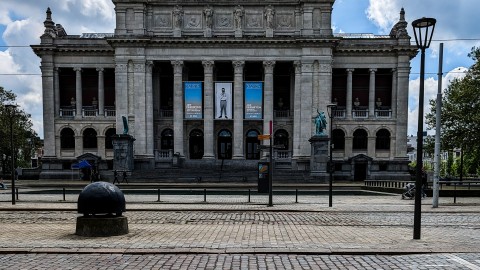
The third stage aimed to acclimatise the entire target group (designers, artists, students, companies, technicians, curators, etc.). Everyone should feel comfortable in the matter of lighting technology and lighting design for art and heritage. Therefore, a physical event was organised in one of the largest and recently renovated art museums. It was organised at the Royal Museum of Fine Arts Antwerp (KMSKA) on 27/03/2025 involving different experts among the members of Cluster Groen Licht Vlaanderen.In the afternoon, all critical requirements and concerns regarding light within the museum context were discussed and, via a guided panel discussion, the requirements of an optimised lighting device for museum applications will be discussed. A visted at the Museum afterwards was included.
As the final ‘Performance Lab 4’ in a series on museum lighting, this session brought together all the key aspects involved in specifying, designing and optimising lighting and lighting control systems for museums, art galleries and multi-purpose exhibition spaces.
Programme & Downloads:
- 1.30 pm Welcome with coffee, tea and water
- 2.00 pm Lectures, part 1
- 25’ Elvira Servaes (KMSKA – host): Introduction to the renovation of the KMSKA; the concept, the construction process and aspects of ‘light’ in and around the building - Link
- 20’ Barbara Van den Broeck (Spectrum Advies en Design): The gardens and side façades of the KMSKA in a new light - Link
- 25’ Wouter Ryckaert (KU Leuven – Ghent): New metrics for colour rendering - Link
- 15.10 Live demos and coffee break
- Kaveh Ahmadian (KU Leuven – Ghent): colour tuning demonstrator
- Wouter Ryckaert (KU Leuven – Ghent): measuring the spectral characteristics of light
- 16.10 Lectures part 2
- 17.30 Reception and networking
a demonstrator (prototype) of an innovative lighting device that addresses the latest requirements for museum lighting
In the fourth, last and longest stage (a long road to success), a demonstrator (prototype) of an innovative lighting device that addresses the latest requirements for museum lighting, will be created in a collaboration between students (Master Engineering Technology, PhD lighting ) and lighting companies. Attention was paid to better colour characteristics, easier lighting design by means of a tunable, flexible and smart lighting device. At the end of this expedition, this demonstrator was presented at Future Lighting 2025 (a last trip to the top).
Closing lecture at Future Lighting 2025 by Paula Acuna Ronanacio (Delta Light) on 20/11/2025:
'Enlightening art with digital light'
This presentation was the final step in the SHAPE-THE-LIGHT accelerator journey with Performance Labs resulting into innovative museum lighting.
A GLV 'Lichtpuntjes' webinar was also organised on 28/04/2026 as a remaster of the lecture that was organised during the confex Future Lighting 2025.
Exhibitions in musea and art galleries have a temporal character. The rendering of paintings and art pieces in general is highly dependent on the lighting conditions. Adapting constantly the lighting conditions in temporal exhibitions demands plenty of resources to satisfy the illumination of diverse form factors, and requires constantly different type of luminaires and/or accessories, which is not sustainable. Based on this motivation, a smart lighting projector has been conceived, whose angular distribution can be adapted to the shape and dimensions of the piece of art using computer vision and an electronically controlled projector with a resolution of 6° in a range between 20° and 65°. The projector exhibits lighting characteristics that are apt for integration into museum lighting such a high CRI (>90), warm-to-neutral CCT and a smooth projection.
The research towards this smart lighting projector was conducted as part of SME funded project with KU Leuven as knowledge partner.
Announcement:
Downloads:
World Café 1 : Circularity in Lighting Design
World Café 1 : Circularity in Lighting Design
At Future Lighting 2024, Sabine De Schutter presented her vision for circular lighting design as part of the European SHAPE THE LIGHT project. She did emphase the importance of reuse, disassembly and standardisation in lighting design to minimise the ecological footprint. De Schutter did advocate an integrated approach in which sustainability and aesthetics go hand in hand, and lighting designers play an active role in the transition to a circular economy.
Sabine De Schutter is Woman in Lighting (WIL) ambassador for Germany. After this session a WIL gattering was organised at Future Lighting
Downloads:
- Article website Future Lighting 2024
- Link to recording: https://www.youtube.com/watch?v=WBm4LhydCpw
- Presentatie (pdf): link
Circulair bouwen en Lichtontwerp
Future-Lighting-Sabine-de-Schutter.pdf
World Café 2
extra info: overview article in STEPP Magazine
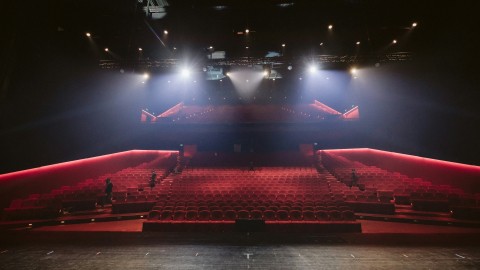
The aim of this event, organised as a World Café under the theme ‘light for art’, was to explore the topic of sustainability in lighting within the performing arts, to discuss projects and to brainstorm on ideas in groups via discussion tables moderated by experts.
The agenda included a plenary lecture on sustainability in lighting within the cultural sector, featuring, among other things, a presentation of the 'Gele Zaal' case study at the Royal Conservatoire of Antwerp, a mini-exhibition, discussion tables and networking.
Downloads:
- Summary of the event: artikel in STEPP Magazine 51
World Café 3
Extra info: Safe use of laser diodes in light art, at light festivals and at events and on stages
Objective
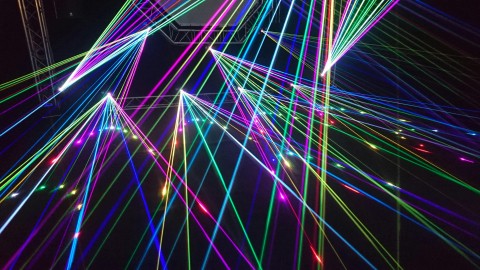
The aim of this event, organised as a World Café under the theme ‘light for art’, is to explore the topic of the safe use of lasers in light art and at light festivals and events, to discuss projects, and to brainstorm on these topics in groups via discussion tables moderated by experts.
Approach
This activity was organised as a World Café, whereby, following an introduction and the keynote, various rotating discussion tables were set up with one expert acting as moderator for each specific theme.
At the end of the 30 minutes, each participant moved to a different table. Only the moderators remained to welcome the next group and briefly brief them on what happened in the previous round, using the flipchart as a visual reminder of the previous discussion.
[World Café methodology: to stimulate creative and collaborative thinking – enabling new ideas, insights and questions to emerge during the planned exchanges with multiple stakeholders.]
Programme & Downloads
- 13.30u - Reception in B015
- 13:45u - Introduction Inleiding Catherine Lootens (KU Leuven - Groen Licht Vlaanderen)
- 14:00u - Keynote Nils De Laeter (A Light Balance): Explanation using the Light Festival 2024 case study – introduction to the NBN EN-60825 standard
- 14:30u – Discussion tables:
- Table 1: An in-depth look at the NBN EN-60825 standard regarding safety in the use of lasers for artistic applications. What are the safety classes and what needs to be taken into account? Moderator: Nils De Laeter (A Light Balance)
- Table 2: How do you interpret the safety measures in relation to the application? (What can be measured in the context of safe use?) How does this restrict artists’ creative freedom? Moderator: Jeroen Claes (Laser XL)
- Table 3: How do artists and lighting technicians use lasers today, and in the future? Moderator: tba (Catherine Lootens)
- Table 4: What are the advantages of using laser diodes, and will laser diodes replace all LED light sources in the future? Moderator: Youri Meuret (Laboratory for Light Technology, KU Leuven – Ghent): led versus laser diode
- 16.30u - Summary of the round-table discussions: Nils De Laeter
- 16.45u – Networking